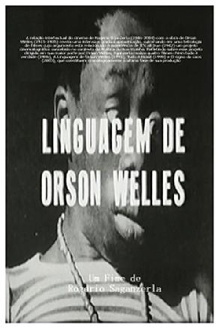
Orson Welles acted in Brazilian culture and music by deeply researching Brazil's historical geology, consciously completing a legendary cultural mission. Although being turned down by Hollywood producers, he developed a triumphantly accomplished mission in the language domain - three friends of Welles' testified his love for cinema, his passion for Brazilian music and people and his obstinate endurance against formidable pressures coming from inside and outside Hollywood regarding his unfinished "It's All True".
'Coffea arábiga' was sponsored as a propaganda documentary to show how to sow coffee around Havana. In fact, Guillén Landrián made a film critical of Castro, exhibited but banned as soon as the coffee plan collapsed.
Working men and women leave through the main gate of the Lumière factory in Lyon, France. Filmed on 22 March 1895, it is often referred to as the first real motion picture ever made, although Louis Le Prince's 1888 Roundhay Garden Scene pre-dated it by seven years.
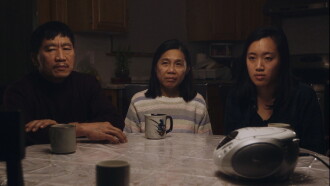
Filmmaker Carol Nguyen interviews her own family to craft an emotionally complex and meticulously composed portrait of intergenerational trauma, grief, and secrets in this cathartic documentary about things left unsaid.
Short 1964 black-and-white documentary featurette hosted by Sean Connery and featuring the real-life inspiration for the character of Q, Major Geoffrey Boothroyd with a discussion of the gun weaponry used by James Bond.
Supermodel Adriana Lima presents a behind-the-scenes look at the FIFA congress in the Rwandan capital of Kigali in March 2023, which made Kigali the first-ever host city of a FIFA elective congress in Africa.
The Kabul National Museum, once known as the "face of Afghanistan," was destroyed in 1993. We filmed the most important cultural treasures of the still-intact museum in 1988: ancient Greco-Roman art and antiquitied of Hellenistic civilization, as well as Buddhist sculpture that was said to have mythology--the art of Gandhara, Bamiyan, and Shotorak among them.
Karlon, born in Pedreira dos Húngaros (a slum in the outskirts of Lisbon) and a pioneer of Cape Verdean creole rap, runs away from the housing project to which he had been relocated.
Popular movie trailers from 1990
These some of the most viewed trailers for movies released in 1990:
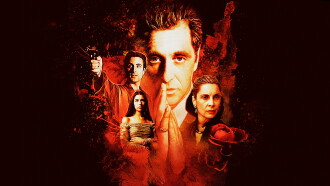
In the midst of trying to legitimize his business dealings in 1979 New York and Italy, aging mafia don, Michael Corleone seeks forgiveness for his sins while taking a young protege under his wing.
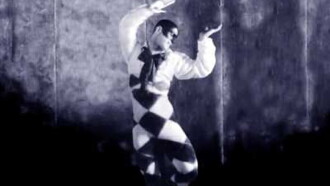
As he gradually turns mad, the dancer Nijinsky evokes the important episodes of his life. In costumes and sets of lush beauty, the divine puppet performs in a final show where the secondary characters are named: Diaghilev, Isadora Duncan, Stravinsky, Auguste Rodin, Léon Bakst.
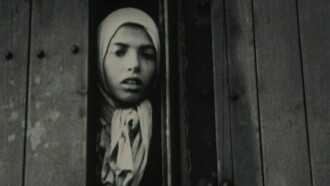
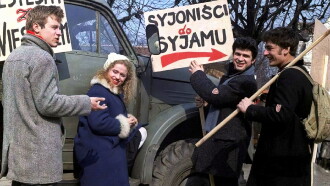
Young people living in Poland in the late 1960s had to face difficult times and make tough choices. Some of them were forced to leave their country for having Jewish origin.
Vivian is a carefree, streetwise diamond in the rough when she meets sophisticated billionaire Edward in a chance encounter that turns into a week-long business arrangement.
With his nephews and niece, everyone's favorite rich uncle, Scrooge McDuck, treks from his mansion home in Duckburg in search of the long-lost loot of the thief Collie Baba.
Andreas, who is ten, has been brought up by his grandmother. When she dies, he removes a putto from the crucifix placed upon her, puts it in his mouth and does not speak again.