Takahiko Iimura Trailers
KIKAIDE MIRUKOTO = Eye Machine / To See by Chance –The Pioneers of Japanese Video Arts– TrailerFilm Workshop In SANGENJAYA - Summer TrailerAssociations of Silverpencils Trailer
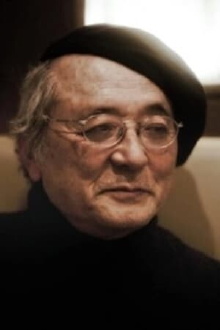
Takahiko Iimura has been a pioneer artist of Japanese experimental film and video, working with film since l960 and with video since 1970 while residing in New York and Tokyo. He is a widely established international artist, having numerous solo exhibitions in major museums such as the Museum of Modern Art, New York, the Whitney Museum, New York, Anthology Film Archives, New York, Centre George Pompidou, Paris, the National Gallery Jeu de Paume, Paris, Palais des Beaux-Arts, Brussels, Reina Sofia National Museum, Madrid, and the Tokyo Metropolitan Museum of Photography, Tokyo in addition to an artist residency at the German Academy of Arts, Berlin, and Bellagio Rockefeller Foundation Study Center, Bellagio, Italy.
Most Popular Takahiko Iimura Trailers
Total trailers found: 92
03 October 1978
Four four-minute image sections and four four-minute sound sections are linked in all combinations of the sound sections with each of the image sections.
01 January 1985
Home movies shot on Super 8mm by W+B Hein over 10 years.
06 August 1997
Jonas Mekas assembles 160 portraits, appearances, and fleeting sketches of underground and independent filmmakers captured between 1955 and 1996.
27 March 1976
Camera, Monitor, Frame is the first installment of Takahiko Iimura's "Video Semiotics Triptych" (the other two works are Observer/Observed, made in 1975, and Observer/Observed/Observer, made in 1976).
01 January 1969
Iimura creates a short self-portrait as well as brief portraits of five of his peers: Brakhage, Vanderbeek, Smith, Mekas and Warhol.
13 August 1963
Filmed turning the camera upside down, and without looking through the viewfinder, this experimental short features fragmented scenes of people, a girl, an amusement park, the beach, etc.
01 January 1969
While I was staying in New York in the 1960s during the rise of the hippie movement, I filmed performances of body painting by the artist, Kusama Yayoi, together with the performers.
01 January 1996
Sky and ground which was cut off momentarily / A camera wanders seeking its own shadow / The images which explore the limit / of solitude in New York / A mythological verbal space in which / snakes and birds are intermingled / A unique world where these images / and words meet.
07 December 1967
In the context of the Cold War, use of the word “shelter” was common. However, it surprised Iimura when he started to live in New York in the 1960s.
15 February 2023
In 1973 the Kino Arsenal – then in its Welserstraße location in Berlin-Schöneberg – showed a programme of videos by the Japanese artist Takahiko Iimura.
01 January 1993
Experimental film involving letters.
01 January 1970
One of the earliest minimalist video with flicker effects was produced in Tokyo in early 1970s. A flickering video with eyes, which super-impose the positive over the negative, open and close rapidly.
01 January 1977
Demonstrates the visual logic (and illogic) of sign combining with limited movements of camera for panning and zooming.
01 January 1973
"Of the new foreign work I saw, (at the Avantgarde Film Festival in London) that of Taka Iimura interested me most – His film + & -, using scratched signs, displayed how perception can be molded by the concept.
24 September 2004
An animation film in which the outline of the image of a stone garden was traced on computer. As the result while the camera-crews moved in film-making, the stone, the drawn line moved in animation.
01 January 1981
In "I Am A Viewer, You Are A Viewer" the performer plays the double role of the performer and the audience simultaneously, talking to his own shadow.
01 January 1970
Originally filmed in 8mm a little stone-made Buddha in a temple of Katmandu, the film strip in ten seconds was projected as a loop, and then the screen w as refilmed many times in 16mm at different speeds (frames per second).
09 December 1975
This film, and in particular the function of sound within it will vary freely from moment to moment, viewer to viewer.
01 January 1989
An image synthesized version of Mardi Gras festival in New Orleans, in which many colorized images flow slowly left to right as the parade of the floats goes by in front of the camera with the decorated messages.
01 January 1987
"Double Portrait" and "I Love You" are a paired piece with Akiko Iimura. Both Iimuras play individually as well as a unit.
19 January 1967
A program of five films on love and sex from the Japanese underground of the experimental cinema, assembled by avant-garde cineaste Takahiko Iimura, and shown at the American Cinematheque from January 19 to 25, 1967.
22 January 2002
Experimental short by Keiji Aiuchi.
01 January 1970
When I came to the USA in the mid 1960s, it was the high point of the Hippie movement and the black riots.
07 December 1981
Consisting of four parts: Between the Frames; Seeing Nothing; The Privilege to See; I Am A Viewer / You Are A Viewer.
01 January 1975
Cameras observing each other.
01 January 1970
One of Takahiko Iimura's (and modern art's) earliest works in conceptual video, A Chair entirely consists of a steady (and usually ghosted) image of a chair to the accompaniment of the firecracker pops of television static.
01 January 1972
Short work.
01 January 1989
"The Making..." showed not only the process of film-making, but also the creation of "MA" as a work.
01 January 1995
"This Is A Camera Which Shoots This" and "As I See You You See Me" are both set up facing two cameras and monitors and the performer walks between them while voicing the sentence of the title.
01 January 1985
A voice performance by John Cage who "reads", "vocalizes" and "whispers" in three different manners his artificial language taken from "Finnegens Wake" by James Joyce.
06 June 2003
This video deals with the perception of seeing including the words as I see you, I am seen, and I am not seen.
01 January 1977
The films concerns the "duration" (or non-duration) of one frame, as the title indicates, the minimum unit of film in space (dark and light) with sound (or silent) and their various combinations.
01 January 1981
A kind of first person cinema where the filmmaker is the cameraman as well as the actor. Acting like a total stranger in the city who does not speak or hear the language, he walks with a camera to such sight-seeing spots as Times Square,and the top of the Empire State building, etc.
01 January 1967
White Calligraphy is an abstract short made by scratching characters from 'Kojiki', an early Japanese text, into the frames of 16mm black leader.
01 January 1995
"This Is a Camera Which Shoots This" and "As I See You You See Me" are both set up facing two cameras and monitors and the performer walks between them while voicing the sentence of the title.
16 December 1964
Short film for the "A Commercial for Myself" programme.
01 January 1977
In the general classification, this was a complete abstract film and a kind of experimental movie as well, only black film, which blocks light, and clear film, which is totally transparent, were used as the basic materials.
01 January 1973
"In 1 to 60 Seconds Iimura does an extraordinary thing: he abstracts time from any concrete associations, seems to put it on the screen and there you sit looking at (or for) it, experiencing it.
07 December 1966
labeled in the CCJ as "Why Not Sneeze?", this film has been described as blatantly inspired by Marcel Duchamp’s ANEMIC CINEMA.
01 January 1984
‘New York Hot Springs’ (1984) is scenes of steam coming out of many streets of New York, a typical scene in winter, in repeated cycles of short shots.
09 December 1972
Visually, each section of the film is composed of 10-second spans of clear and dark leader, arranged in a progressive fashion so that at first there is more and more light and less darkness, then vice versa.
07 June 2012
8mm short by Kenji Onishi and Tohru Mabuchi.
01 January 1987
“Double Portrait” and “I Love You” are a paired piece with Akiko Iimura. Both Iimuras play individually as well as a unit.
01 January 1970
When I came to the USA in the mid 1960s, it was the high point of the Hippie movement and the black riots.
01 January 1989
A journey through light and darkness reflected on the city of New York.
16 December 1964
Short film for the "A Commercial for Myself" programme.
01 January 1976
Cameras once again observing each other.
31 December 1963
Anma (The Masseurs) is a representative and historical work by the creator of Butoh dance, Tatsumi Hijikata in his early period in the 1960s.
01 January 1972
By using simple systems of counting and measuring in film, Iimura has drawn attention to the complexities of our time perception – memory, rhythm, phase – and the interaction between coucious conception of time, and the physical perception of its passing.
11 May 1972
On John's 31st birthday, Yoko held an art exhibit, "This Is Not Here", at the Everson Museum of Art in Syracuse, N.
01 January 1972
Takahiko Iimura's Models Series
01 January 1972
Takahiko Iimura's Models Series
01 January 1971
'What I am concerned with in this film is not only the flicker effect, but also the coming and going of an eye-like shape on screen which was created by a fade-in-out device while shooting the light/the bulb of the projector.
01 January 1981
The 1981 performance Circle & Square by Takahiko Iimura, New York-based Japanese film and video pioneer, evolved from the artist's interest in exposing the apparatus of projection and the materiality of image and light, which began in the mid-60s.
26 November 1984
A mind-twisting video, meditating on the experience of watching film/video, and of seeing and being seen.
01 January 1962
"10 minutes of the act of creation itself run through close up and magnifying lenses. " -T.I.
01 January 1972
Models, Reel 2 (B-1~4) consists of four works and is dealt with, different from Reel 1, symbol/words, and the logic in film.
01 January 1972
"These two reels (A-1~4, B-1~4) of MODELS I think are unusually important works. You are certainly one of the filmmakers to so explicitly direct your effort to the amazing aesthetic question of the internal calibration of consciousness.